Skip to content
Tulsa Water Damage HelpTulsa, Oklahoma

Water Damage in Tulsa, OK: What To Do First

Tulsa has its own water damage profile. Clay soil that moves, freeze-thaw winters, humid summers that clog attic condensate lines, and a river corridor that flooded hard in 2019. This page covers what to do in the first hour, the losses that happen most often here, how the drying process actually works, and how to connect with available local help.

  • First hour, in order
  • Local conditions that cause losses
  • How mitigation and rebuild differ
  • Coverage, costs, and what to ask

Service information and connection requests on this site may be provided through third-party service providers. We may receive compensation when a visitor connects with a provider.

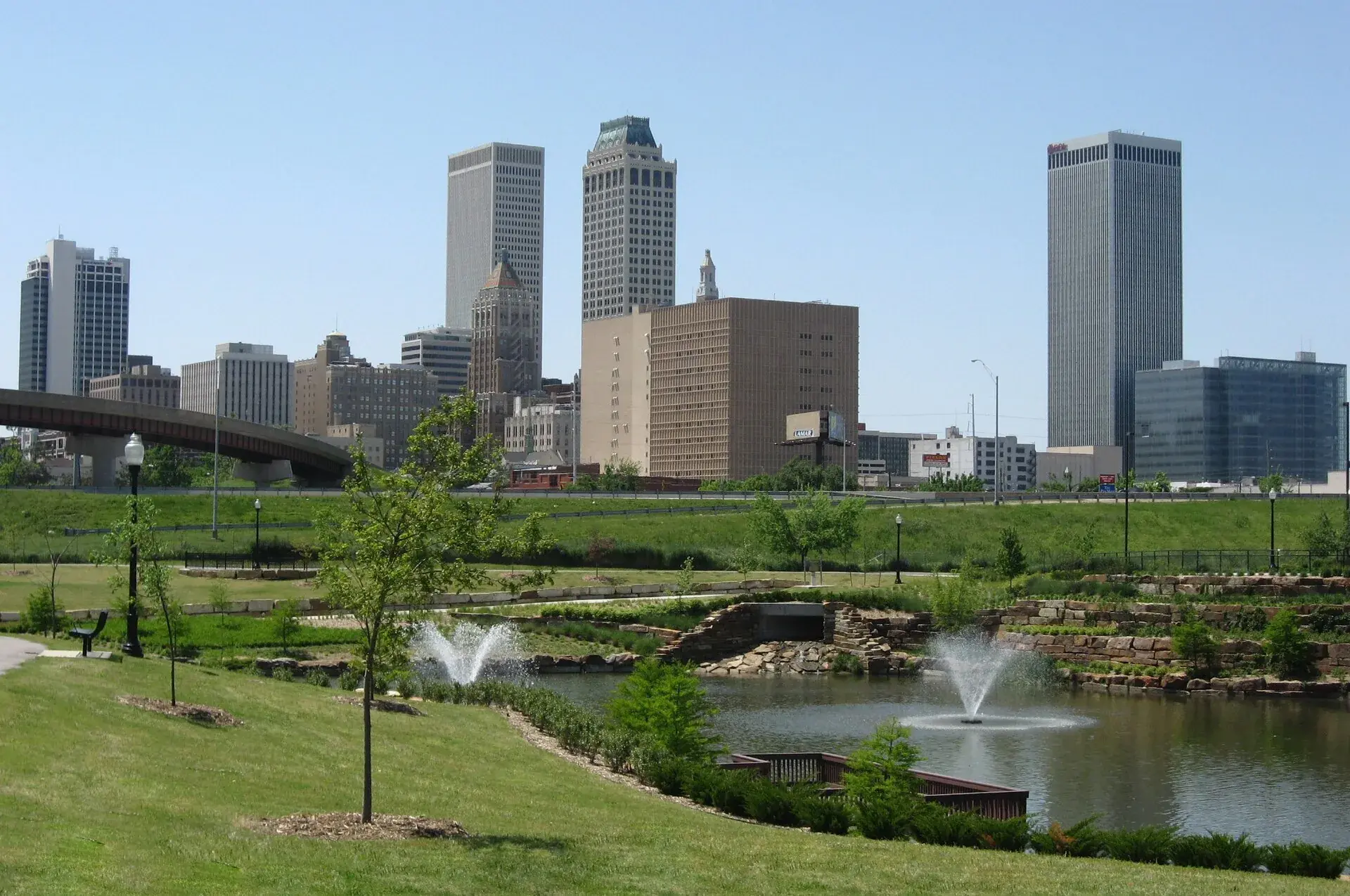
Downtown Tulsa, Oklahoma

The first hour, in order

  1. 1Shut off the water. In most Tulsa homes the main shutoff is at the meter near the street, in a garage utility area, or where the service line enters a crawlspace. Know yours before you need it.
  2. 2Cut power to affected rooms at the breaker — but only if you can reach the panel without walking through water. If the panel is in the wet area, leave it and call an electrician.
  3. 3Photograph everything before you move it: the water line on the wall, the source of the leak, and each affected room. Note the time you found it.
  4. 4Get standing water out with towels and a wet vac on hard surfaces. Do not use a household carpet cleaner, which sprays water rather than removing it.
  5. 5Start air movement and dehumidification. Opening windows on a humid Oklahoma day works against you; running the AC does not.
  6. 6Move furniture and belongings out of the wet zone, and lift what you cannot move onto foil or plastic.
  7. 7Call your insurance company to report the loss, and arrange professional drying if water reached carpet, drywall, a ceiling, or a wall cavity.

If electrical systems or contaminated water are involved, prioritize personal safety and follow professional or emergency guidance. Never work in a wet space where power to that area has not been confirmed off.

Water in the building right now?

Send a short request and we will use your details to connect you with available local providers serving Tulsa.

A call option is being set up for this site. In the meantime, use the request form and we will follow up with available local providers.

  • Independent information and connection service
  • No cost to submit a request
  • Available for Tulsa, Broken Arrow, Bixby, Jenks, Owasso, and Sand Springs

Tulsa Water Damage Help does not publish a phone number until a tracked line is configured, so no one reaches a dead number.

Service information and connection requests on this site may be provided through third-party service providers. We may receive compensation when a visitor connects with a provider.

Request help

Name, phone, ZIP, and what is happening. That is all we need to start.

We do not collect more than we need to make the connection. See the privacy policy for details.

Why water damage in Tulsa looks the way it does

National advice about water damage is written for an average house in an average climate. Tulsa is not average on either count, and the local differences show up in what fails and when.

  • Expansive clay soil that swells when wet and shrinks when dry, which moves foundations and stresses buried and underslab piping over the years.
  • Freeze-thaw cycles in winter that alternate rapidly, putting repeated stress on supply lines in garages, crawlspaces, and exterior walls.
  • Attic air handlers and condensate lines that clog during humid summers and overflow into ceiling assemblies, which is one of the most common hidden losses here.
  • Water heaters in garages, closets, and attics that fail and release 40 to 80 gallons into spaces that are rarely inspected.
  • Storm-driven rain that gets behind siding, under window flashing, and into wall assemblies during spring and early summer.
  • River and creek flooding along the Arkansas River, Bird Creek, and other corridors — a different category of loss from a plumbing failure.

The 2019 floods are the reference point for anyone who lived here through them. Sustained high-volume releases from Keystone Dam, combined with record rainfall, pushed the Arkansas River out of its banks and contributed to flooding and evacuation notices in low-lying parts of the metro. That event is also why flood coverage deserves an honest conversation — it is not part of a standard homeowners policy, and most of the properties that were affected were not thinking about flood insurance beforehand.

The losses that happen most often here

Burst and frozen pipes

The classic Oklahoma winter event. A freeze-thaw cycle splits a supply line in a garage, crawlspace, or exterior wall, and the damage shows up when it thaws. Older Tulsa housing stock makes this more likely than in newer subdivisions.

Burst pipe cleanup

Water heater failures

Tank failures in garages and closets are among the most common internal losses. Attic installations are worse, because water runs along the ceiling assembly and shows up as a stain in a room that is not directly below the heater.

Water heater leak help

Storm and wind-driven rain

Spring storms push water in through roof damage, siding, and flashing. By the time a ceiling stain appears, the framing above it has usually been wet for a while.

Storm water damage

Flooding in the river corridor

The 2019 floods, with sustained high releases from Keystone Dam and record rainfall, put water into low-lying areas across the metro. Flood losses are handled differently from plumbing losses by every insurer.

Flood cleanup

How the cleanup actually works

Phase 1

Assessment

Moisture readings and thermal imaging to find where the water went, not just where it shows. This is what produces a scope instead of a guess.

Phase 2

Extraction

Standing and free water removed with pumps and extractors. Carpet pad typically comes out here, because it holds water and cannot be dried in place.

Phase 3

Drying

Air movers and dehumidifiers run continuously for several days, with readings taken until materials return to a normal moisture content.

Phase 4

Rebuild

Drywall, flooring, trim, and paint — a separate phase of work after drying is verified, and usually a separate part of the insurance claim.

The part worth insisting on is the documentation. A drying job that is not verified with recorded readings is an opinion, and moisture left inside a wall or under a floor shows up months later as a buckled floor, a musty room, or a stain with no obvious cause. Ask any provider how they document dryness, and expect a real answer.

Insurance: the distinction that decides most claims

Insurers categorize water losses by cause. A sudden failure — a pipe that splits during a freeze, a tank that rusts through — is generally covered as accidental discharge. A leak that has been seeping for months is commonly treated as a maintenance failure and excluded. Flooding from outside the structure requires a separate flood policy.

That is why documentation matters so much, and why it should happen before cleanup starts. Photographs of the source, the water line, and the affected rooms establish that the loss was sudden and recent. A claim supported that way is far easier to pay than one presented weeks later with no evidence of what happened.

Choosing who to work with

  • Ask for an on-site assessment before any price is quoted. Phone estimates for water damage are not meaningful.
  • Ask what the scope covers: extraction, equipment and days, monitoring, removal and disposal, cleaning, and whether rebuild is separate.
  • Ask how moisture readings will be documented and whether you will receive a copy.
  • Ask about after-hours rates before work begins, not afterward.
  • Read anything you are asked to sign, especially a direction to pay or an assignment of benefits.
  • Remember that you generally choose the contractor, even when an insurer recommends one.

Tulsa water damage questions

How quickly does water damage need to be addressed in Tulsa?

Within hours, not days. Water keeps wicking into drywall, subfloor, and framing the entire time it is present, and mold can begin colonizing wet materials in roughly 24 to 48 hours. Drying equipment deployed on day one can often save materials that would have to be removed on day three.

Does homeowners insurance in Oklahoma cover water damage?

Usually for sudden and accidental losses such as a burst supply line or a failed water heater, and typically not for gradual leaks, deferred maintenance, or flooding. Flood coverage is separate, usually through the National Flood Insurance Program or a private carrier. Your own policy is the only authoritative answer.

What if the water came from outside during a storm?

That is generally treated as flood damage rather than a plumbing loss, which puts it outside a standard homeowners policy unless you carry flood coverage. Surface water, creek overflow, and river flooding all fall into that category. Photograph the source carefully, because the origin of the water is what determines the claim.

How long does it take to dry a house in Tulsa?

A contained loss usually dries in three to five days with equipment running continuously. Summer humidity, saturated subfloor, ceiling assemblies, and below-grade spaces extend that. Drying is finished when moisture readings return to a normal range — not when the surface feels dry.

Can you promise a response time?

No. Response time depends on distance, traffic, and how many other calls are already in progress, and during a metro-wide storm event demand spikes everywhere at once. Anyone promising a guaranteed arrival window before seeing your property is guessing.

What does it cost?

There is no single number. Pricing depends on the affected area, the water category, what has to be removed, and how many days of drying are required. Any meaningful figure comes from an on-site assessment, and a phone estimate is not one. The guides on this site explain what drives the cost rather than inventing a range.

Is Tulsa Water Damage Help a restoration company?

No. This site is an independent information and connection service. We publish guidance and help visitors connect with available local providers, and we do not perform restoration work ourselves. We also do not publish invented prices, review scores, or credentials.

More general questions

Tulsa-area communities

Each area page covers the local housing stock, the failure patterns that come with it, and what a property owner there should watch.

Tulsa

Tulsa County

Citywide water damage guidance for Tulsa homeowners, from downtown and midtown to the creek corridors on the south and east sides.

Local details

South Tulsa

Tulsa County

Water damage guidance for South Tulsa homes, where slab construction and open floor plans change how water spreads and how it is dried.

Local details

East Tulsa

Tulsa County

Water damage guidance for East Tulsa, where post-war ranch housing and older drain lines drive most of the plumbing-related losses.

Local details

Midtown Tulsa

Tulsa County

Water damage guidance for Midtown Tulsa's older homes, where original plumbing, pier-and-beam foundations, and mature tree roots set the pattern.

Local details

West Tulsa

Tulsa County

Water damage guidance for West Tulsa and the Red Fork area, including river-adjacent properties affected by Arkansas River high water.

Local details

Broken Arrow

Tulsa County

Water damage guidance for Broken Arrow homeowners, where newer slab construction and rapid growth shape how water problems show up.

Local details

Bixby

Tulsa County

Water damage guidance for Bixby homeowners, from the older downtown blocks to the newest subdivisions south of the Arkansas River.

Local details

Jenks

Tulsa County

Water damage guidance for Jenks homeowners, including river-adjacent properties affected by Arkansas River high water.

Local details

Owasso

Tulsa and Rogers counties

Water damage guidance for Owasso homeowners, including freeze-related pipe failures and newer subdivision drainage issues.

Local details

Sand Springs

Tulsa County

Water damage guidance for Sand Springs, including river-adjacent properties downstream of Keystone Dam and older industrial-era housing.

Local details

Services covered

Guides

All 10 guides · Tulsa area details · First-hour checklist

Ready to get help?

Send a short request with your name, phone, ZIP, and what is happening. We will use it to connect you with available local providers.

A call option is being set up for this site. In the meantime, use the request form and we will follow up with available local providers.

  • Independent information and connection service
  • No cost to submit a request
  • Available for Tulsa, Broken Arrow, Bixby, Jenks, Owasso, and Sand Springs

Tulsa Water Damage Help does not publish a phone number until a tracked line is configured, so no one reaches a dead number.

Service information and connection requests on this site may be provided through third-party service providers. We may receive compensation when a visitor connects with a provider.

Request help

Name, phone, ZIP, and what is happening. That is all we need to start.

We do not collect more than we need to make the connection. See the privacy policy for details.

Request help